
Surface cleaning technology stands at a critical transformation point. Decades of reliance on abrasive blasting, chemical stripping and mechanical grinding created operational challenges that industries can no longer ignore. Environmental regulations tighten. Workplace safety standards strengthen. Cost pressures intensify. Traditional methods struggle to satisfy these converging demands simultaneously.
Laser technology resolves this conflict through fundamental operational advantages. Precision cleaning occurs without chemicals, abrasives or substrate damage. Waste generation drops to minimal levels. Operator exposure to hazardous materials disappears. Processing speeds exceed conventional methods substantially.
Wellington businesses face mounting pressure to modernise surface treatment operations. Regulatory compliance grows more complex. Customer expectations for quality and sustainability rise continuously. Competitive advantages flow to organisations adopting superior technologies ahead of market requirements.
The shift toward laser cleaning represents more than equipment upgrade. It signals strategic repositioning for industries ready to lead rather than follow market evolution.
Industrial Transformation Through Technology Adoption
Traditional cleaning methods served adequately when environmental concerns ranked low and worker safety received minimal regulatory attention. That era ended decisively. Modern industries operate under scrutiny that demands accountability for every chemical used, waste stream generated and employee exposure incident.
Sandblasting produces silica dust that causes irreversible lung damage. Chemical strippers contain carcinogens requiring extensive protective equipment and disposal protocols. Grinding generates particulates whilst damaging substrate integrity. Each method creates problems whilst attempting to solve surface contamination challenges.
Why Change Accelerates Now
Regulatory Pressure Intensifies Across Sectors
Environmental Protection Authority oversight expands continuously. Hazardous substance approvals face stricter scrutiny. Workplace exposure limits tighten for common cleaning chemicals. Waste disposal costs rise as landfill capacity decreases and environmental standards strengthen.
Compliance departments struggle to maintain current approvals whilst traditional methods remain in use. Documentation burdens grow. Audit frequencies increase. Non-compliance penalties escalate dramatically.
Sustainability Goals Drive Operational Changes
Corporate responsibility extends beyond profit generation. Customers demand environmental accountability from suppliers. Investors scrutinise sustainability metrics before capital allocation. Employees prefer working for organisations demonstrating genuine environmental commitment.
Surface cleaning operations contribute disproportionately to industrial environmental footprints. Chemical consumption, waste generation and energy intensity all register significantly in sustainability assessments. Reduction opportunities in these areas deliver measurable improvements to overall environmental performance.
Economic Advantages Favour Advanced Technologies
Initial perceptions positioned laser cleaning as expensive alternative to established methods. Comprehensive cost analysis reveals different reality. Chemical purchasing, disposal fees, abrasive media replacement, equipment maintenance and rework expenses accumulate substantially over operational lifespans.
Laser systems eliminate most consumable costs whilst reducing labour requirements through faster processing. Return on investment calculations increasingly favour advanced technology adoption, particularly when environmental compliance costs factor into comparisons.
Revolutionary Operational Characteristics
Precision and Control Redefine Surface Treatment
Laser cleaning operates through selective energy absorption. Contaminants absorb specific wavelengths more readily than substrate materials. This differential allows precise removal of rust, paint, oils and oxides whilst base metal remains completely unaffected.
Parameter adjustment provides extraordinary versatility. Power density modifies to suit contamination thickness. Pulse duration changes according to substrate thermal sensitivity. Scanning velocity adapts for different area coverage requirements. Repetition frequency optimises for specific material combinations.
Application range extends from delicate to aggressive:
✓ Electronics cleaning at microscopic scales
✓ Heritage restoration requiring gentle treatment
✓ Aerospace component preparation demanding zero tolerance for damage
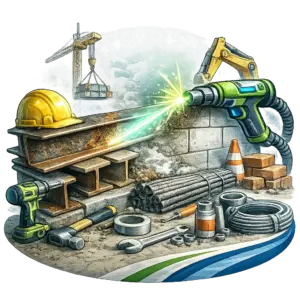
✓ Heavy industrial rust removal from structural steel
✓ Automotive paint stripping without panel distortion
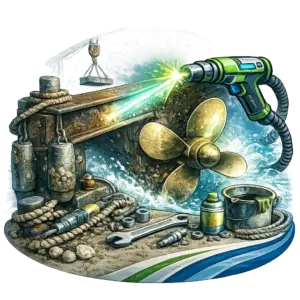
✓ Marine equipment corrosion treatment in situ
Single technology platform serves applications previously requiring multiple specialised methods. Equipment investment consolidates whilst capability expands dramatically.
Versatility Across Materials and Contaminants
Traditional methods work effectively within narrow parameters. Sandblasting suits heavy rust but damages thin materials. Chemical stripping removes paint effectively but attacks certain substrates. Grinding cleans aggressively but alters dimensional tolerances.
Laser cleaning transcends these limitations through non-contact processing and adjustable parameters. Steel, aluminium, titanium, copper and exotic alloys all clean successfully. Rust, paint, oil, carbon deposits, thermal coatings and biological growth all remove completely.
Material thickness ranges from foil-thin electronics components to massive structural members. Surface sensitivity varies from delicate heritage artefacts to robust industrial equipment. Laser technology accommodates this entire spectrum through parameter selection rather than method substitution.
Health and Safety Transformation
Workplace hazards decrease dramatically when chemical and abrasive methods give way to laser technology. Silica dust exposure disappears. Toxic vapour inhalation ceases. Skin contact with corrosive substances stops occurring.
Personal protective equipment requirements simplify substantially. Respiratory protection needs reduce from supplied-air systems to basic filtration. Chemical-resistant clothing becomes unnecessary. Eye protection against laser radiation proves far less burdensome than full-face respirators.
Incident reporting frequencies drop. Workers compensation claims decrease. Insurance premiums reflect improved safety records. Recruitment becomes easier when prospective employees learn about superior working conditions.
Regulatory compliance simplifies when hazardous substance inventories shrink. Safety data sheet management burden reduces. Emergency response planning becomes straightforward. Inspection readiness improves continuously.
Industries Leading Adoption Trends
Automotive Sector Embraces Efficiency
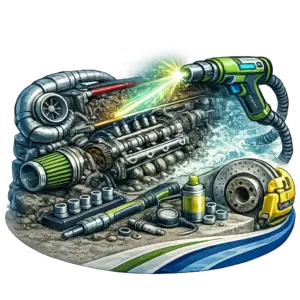
Vehicle manufacturing and maintenance operations adopted laser cleaning early for compelling reasons. Paint removal proceeds without panel warping. Weld preparation achieves superior cleanliness. Corrosion treatment preserves substrate integrity.
Classic car restoration businesses particularly value non-destructive processing. Original panels survive rust removal without thickness loss. Chrome trim cleans without plating damage. Delicate components restore without mechanical stress.
Production facilities integrate laser systems into assembly lines. Spot weld preparation occurs automatically. Quality control verifies cleanliness objectively. Defect rates decrease whilst throughput increases.
Aerospace Applications Demand Precision
Aviation safety depends absolutely on component integrity. Surface treatments must remove contamination without introducing stress concentrations, dimensional changes or material property alterations.
Laser cleaning meets aerospace requirements through controllable, repeatable processing. Thermal barrier coatings lift from turbine blades cleanly. Landing gear assemblies restore without substrate damage. Composite structures prepare for bonding without surface degradation.
Maintenance, repair and overhaul facilities report significant productivity improvements. Component turnaround times shorten. Inspection reliability increases on properly cleaned surfaces. Rework requirements virtually disappear.
Manufacturing Productivity Gains
Metal fabrication workshops benefit enormously from laser technology adoption. Weld preparation proceeds faster with better results. Coating adhesion improves on chemically clean substrates. Mould cleaning occurs without dimensional changes.
Production scheduling becomes more predictable when cleaning operations deliver consistent results. Quality control simplifies through elimination of operator technique variables. Customer satisfaction improves through superior surface finish quality.
Heritage Conservation Advances
Cultural preservation professionals appreciate laser cleaning’s selectivity and gentleness. Stone building facades clean without erosion. Metal sculptures restore without patina loss. Timber structures treat without scorching.
Graffiti removal from heritage surfaces proceeds without substrate damage. Biological growth disappears from masonry without chemical introduction. Paint layers separate selectively to reveal original finishes beneath later applications.
Conservation outcomes improve dramatically when cleaning methods respect original materials whilst removing harmful accumulations.
Municipal Services Modernise
Local government maintenance teams adopt laser technology for graffiti removal, monument cleaning and infrastructure restoration. Speed advantages prove valuable when public spaces require rapid turnaround. Chemical elimination addresses environmental concerns in urban waterways and parks.
Operating costs decrease through elimination of water requirements, chemical purchasing and waste disposal fees. Public perception improves when councils demonstrate environmental responsibility through technology choices.
Innovation Trajectory and Future Development
Automation Integration Advances
Manufacturing environments increasingly deploy robotic laser cleaning systems. Automated inspection identifies contaminated areas. Robotic arms position laser heads precisely. Real-time monitoring adjusts parameters dynamically for optimal results.
Production line integration allows continuous processing without manual intervention. Components emerge ready for subsequent operations without intermediate handling. Quality consistency improves whilst labour requirements decrease.
Portable Systems Expand Accessibility
Equipment miniaturisation brings laser cleaning capabilities to small businesses and mobile service providers. Compact units operate from standard electrical supplies. Transport simplifies through reduced weight and size.
On-site treatment becomes practical for large assemblies, installed equipment and remote locations. Fabrication occurs at project sites rather than requiring component removal and shop processing. Downtime decreases whilst service flexibility increases.
Intelligent Systems Emerge
Artificial intelligence integration enables predictive maintenance applications. Sensor arrays monitor surface conditions continuously. Machine learning algorithms identify optimal cleaning parameters for varying contamination patterns.
Internet of Things connectivity allows remote monitoring and diagnostics. Service technicians receive alerts when maintenance becomes necessary. Performance data accumulates to inform process optimisation and capability expansion.
Autonomous surface treatment systems may eventually operate with minimal human supervision. Initial setup specifies requirements. Technology handles execution through intelligent decision making. Quality verification occurs automatically before signalling completion.
Strategic Positioning for Competitive Advantage
Wellington businesses adopting laser cleaning technology gain immediate operational benefits whilst positioning strategically for future requirements. Regulatory environments continue tightening around chemical usage and waste generation. Customer expectations for quality and sustainability keep rising. Labour markets increasingly favour employers offering safer working conditions.
Early adoption delivers competitive advantages before market saturation occurs. Capability differentiation attracts customers seeking superior results. Operational efficiency improvements enhance profit margins. Environmental credentials strengthen brand reputation.
The transition from traditional cleaning methods represents strategic investment in organisational future. Technology maturity and cost-effectiveness now favour adoption across industrial sectors. Waiting for further development delays access to benefits available immediately.
Surface treatment quality influences manufacturing outcomes, maintenance effectiveness and restoration success. Laser technology delivers the foundation that ensures optimal results across diverse applications whilst satisfying environmental, safety and economic requirements simultaneously.
References
Environmental Protection Authority New Zealand – Regulatory frameworks governing hazardous substances, workplace chemical safety and environmental compliance for industrial cleaning operations.
https://www.epa.govt.nz/
Standards New Zealand – Technical specifications for surface preparation, coating systems, quality assurance and environmental management across industrial sectors.
https://www.standards.govt.nz/
WorkSafe New Zealand – Occupational health and safety requirements for industrial cleaning operations, hazardous substance handling and workplace exposure management.
https://www.worksafe.govt.nz/
Ministry for the Environment – Sustainability guidelines, waste reduction strategies and pollution prevention frameworks relevant to industrial surface treatment.
https://www.mfe.govt.nz/
Business.govt.nz – Small business resources for technology adoption, environmental compliance and operational efficiency improvement.
https://www.business.govt.nz/
Callaghan Innovation – Research and development support for technology adoption and manufacturing process innovation in New Zealand industries.
https://www.callaghaninnovation.govt.nz/