
Marine Laser Cleaning
Mobile Boat Cleaning for Aluminium, Steel & Stainless Marine Equipment
Rust Removal, Coating Stripping & Weld Prep Without Drydock Delays
Mobile marine laser cleaning across Wellington Harbour, Porirua, Hutt Valley & Kapiti Coast. Hull cleaning, rust removal & coating prep without drydock.

Wellington-Based
Mobile Service
On-site laser cleaning
across Wellington and
the wider region.

Eco-Friendly &
Chemical Free
Safe for the environment
and sensitive surfaces

Precision Cleaning,
Non-Abrasive
Gentle, yet highly
effective cleaning
process

Experienced
Local Operator
Trusted expert in laser
cleaning technology.
Marine Laser Cleaning Applications
Marine Applications by Material & Component Type
| Component Area | Steel / Carbon Steel | Stainless Steel | Aluminium & Alloys | Typical Applications |
|---|---|---|---|---|
| Hull Fittings & Through-Hulls | • Corrosion & scale removal • Galvanic corrosion treatment • Structural steel maintenance • Coating prep & spot removal |
• Through-hull fitting cleaning • Seacock restoration • Tea staining removal • Salt deposit cleaning |
• Aluminium hull cleaning • Through-hull component prep • Oxidation & residue removal • Anodising preparation |
Maintenance inspections, refit work, survey preparation |
| Deck Hardware & Fittings | • Cleat & fairlead cleaning • Windlass base corrosion • Anchor roller restoration • Mooring fitting prep |
• Stainless railings cleaning • Pulpit & pushpit restoration • Hardware tea staining removal • Deck fitting polishing prep |
• Mast fittings cleaning • Aluminium cleat restoration • Hardware oxidation removal |
Annual maintenance, cosmetic restoration, pre-sale preparation |
| Superstructure & Rails | • Frame corrosion treatment • Structural support cleaning • Paint removal for repairs |
• Stainless railing restoration • Grab rail cleaning • Arch & frame tea staining • Heat-tint removal |
• Aluminium superstructure • Frame member cleaning • Hardtop support prep • Tower component restoration |
Refit projects, appearance maintenance, structural repairs |
| Propulsion & Steering | • Propeller shaft cleaning • Rudder stock corrosion • Stern tube component prep • Steering quadrant cleaning |
• Stainless propeller cleaning • Steering component restoration • Control system hardware |
• Aluminium outboard cleaning • Lower unit restoration • Trim tab component prep • Aluminium propeller cleaning |
Annual servicing, bearing replacement, survey work |
| Engine & Mechanical Systems | • Engine mount corrosion • Exhaust component cleaning • Structural bracket prep • Carbon deposit removal |
• Stainless exhaust cleaning • Heat-tint removal • Manifold restoration • Marine system components |
• Aluminium engine block • Heat exchanger cleaning • Component housing prep • Manifold restoration |
Engine room maintenance, system upgrades, repower projects |
| Welding & Repair Preparation | • Pre-weld oxide removal • Post-weld heat-tint cleaning • Structural repair prep • Patch welding surface prep |
• Stainless fabrication prep • Railing repair welding • Custom work cleaning • Post-weld finishing |
• Aluminium hull repair prep • Welding surface preparation • Contamination removal • Post-weld oxide cleaning |
Structural repairs, fabrication work, damage restoration |
| Timber Components | — | — | — | • Marine timber restoration (selected applications) • Teak deck cleaning • Timber trim work • Classic vessel restoration |
| Manufacturing & Fabrication | • Steel fabrication prep • Component manufacturing • Structural steel cleaning |
• Marine-grade stainless prep • Custom fabrication cleaning |
• Aluminium component prep • Manufacturing cleaning |
• Mould & tooling cleaning for composite and marine component manufacturing |
Precision Vessel Maintenance Without Drydock Delays
Marine environments demand maintenance methods that clean effectively without compromising vessel integrity or causing extended downtime. Salt water exposure accelerates corrosion on steel fittings, creates oxidation on aluminium hulls, and causes tea staining on stainless railings. Traditional cleaning methods struggle to remove these contaminants without causing surface damage or generating hazardous waste. Laser Cleaning Services removes rust, old coatings, and marine contamination using non-contact technology that strips away unwanted material while preserving the metal underneath.
Conventional marine cleaning creates complications. Abrasive blasting damages thin aluminium hulls and removes protective coatings from steel fittings. Chemical strippers create disposal issues and environmental contamination. High-pressure water blasting drives salt deeper into porous surfaces. Manual grinding takes excessive time and risks heat damage. Laser cleaning eliminates these problems by targeting only the contamination layer, leaving base metal untouched. This precision matters when working with vessels where material thickness, weld integrity, and coating adhesion determine operational safety and performance.
Understanding Marine Laser Cleaning Technology
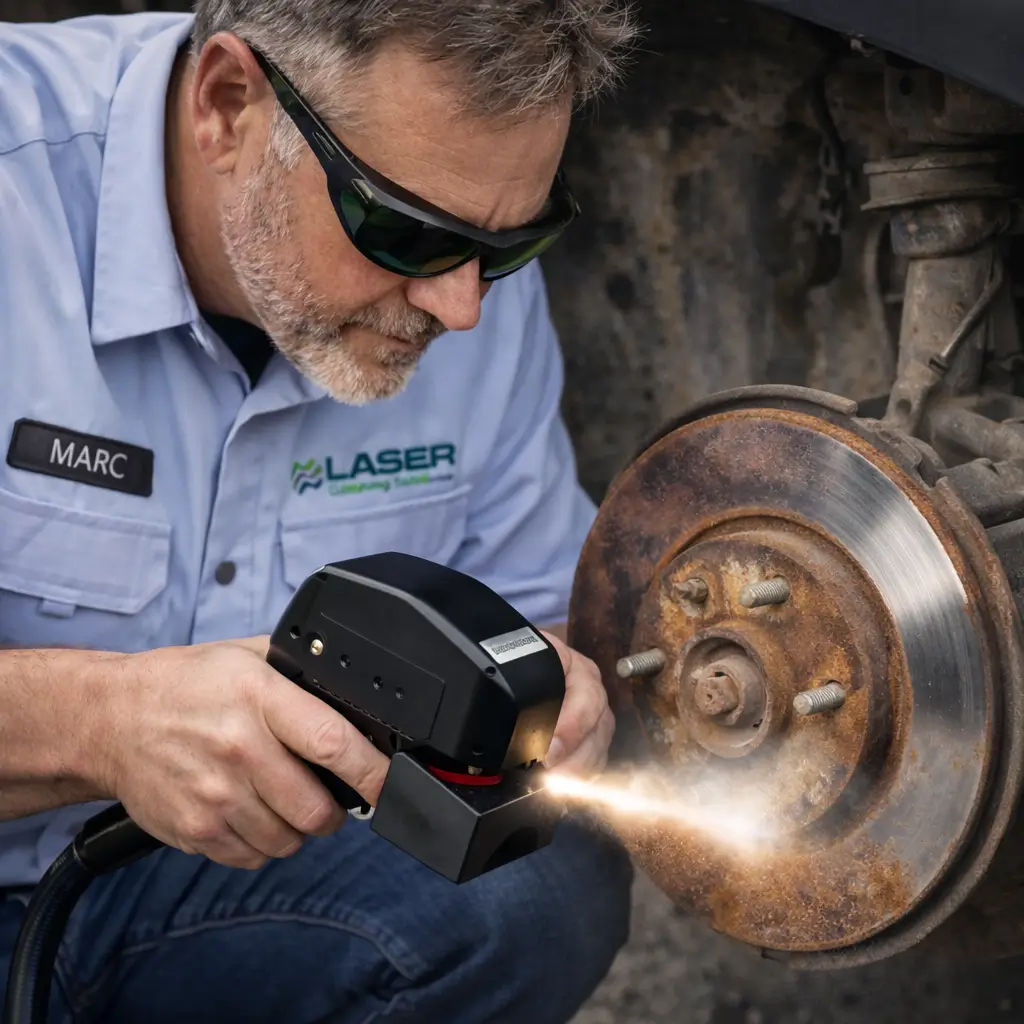
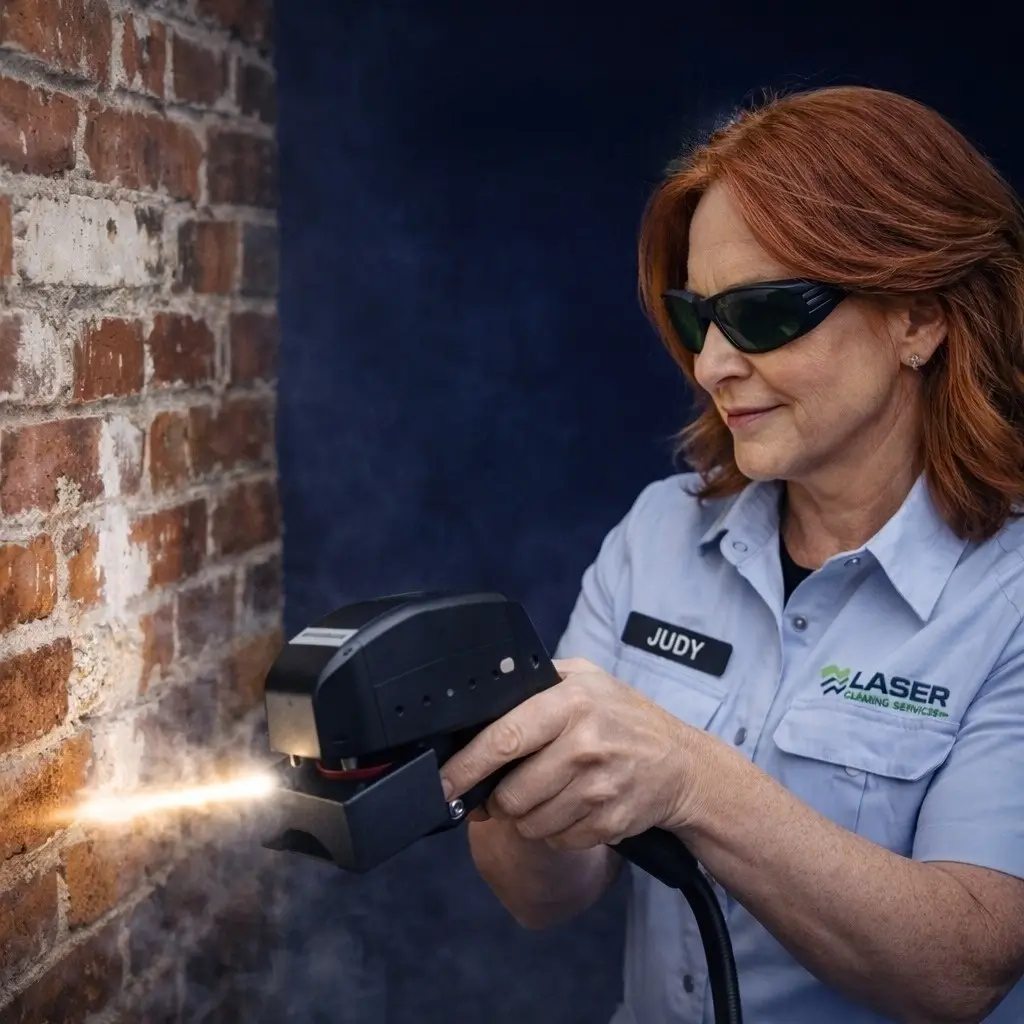
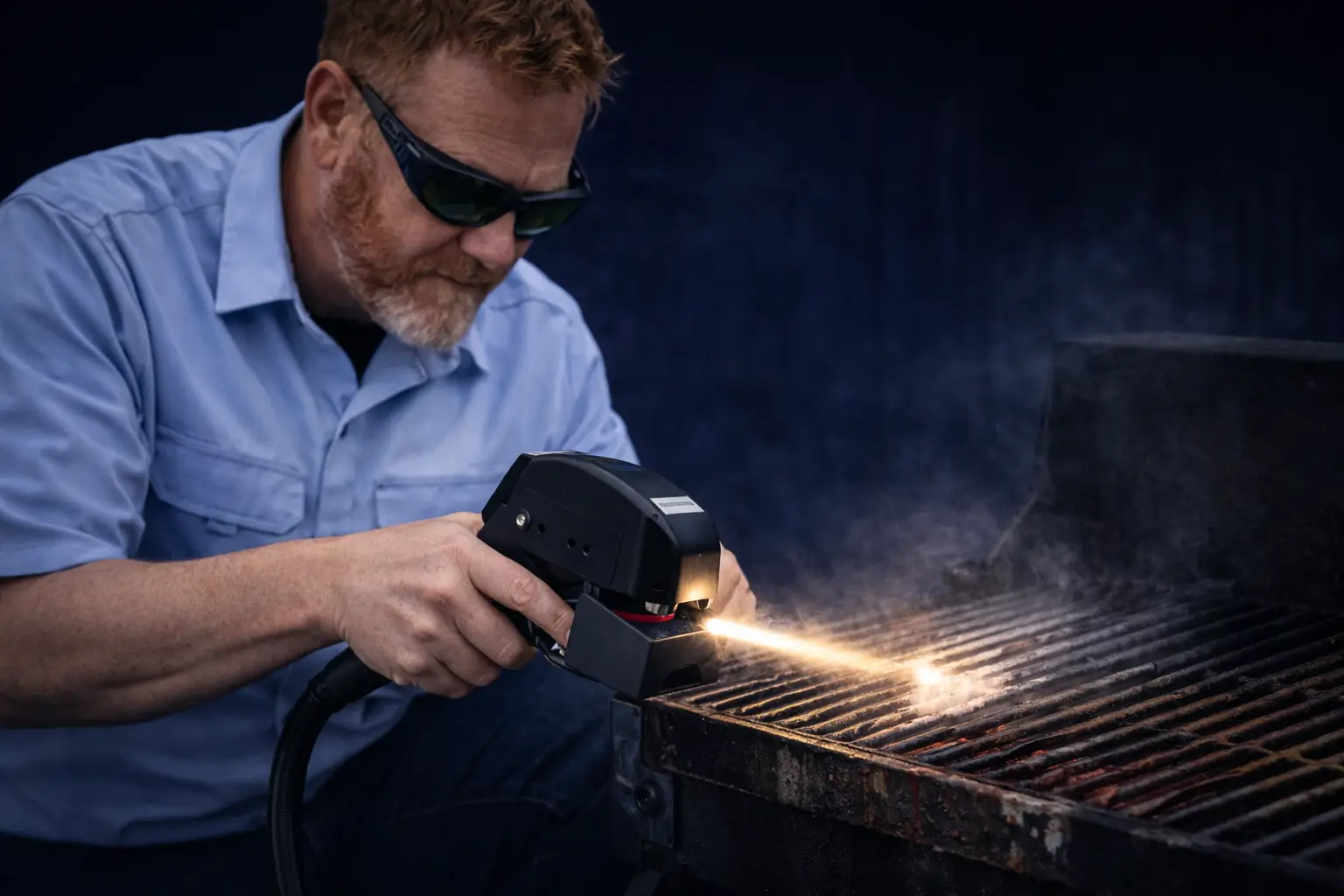
Our laser cleaning equipment directs pulsed energy beams at contaminated surfaces. Rust, old paint, marine growth, and oxidation absorb this energy and vaporise at the molecular level. The base metal reflects most of the laser light and remains unaffected. An extraction system captures the vaporised particles, maintaining clean working conditions. The result is bare metal ready for coating or inspection with no mechanical contact, no surface abrasion, and no chemical discharge into marine environments.
This non-contact approach protects sensitive marine components. Aluminium hulls, stainless fittings, structural steel, and composite materials all receive treatment without grinding away material or leaving surface damage. Because our equipment provides adjustable power settings and pulse frequencies, the same technology handles heavy corrosion removal on steel fittings and delicate cleaning of aluminium components. Settings adjust to match different materials and contamination levels, delivering consistent results across diverse marine applications.
Hull Corrosion and Scale Removal
Steel hull fittings develop corrosion rapidly in salt water environments. Through-hull fittings, rudder stocks, propeller shafts, and structural reinforcements all face constant attack from galvanic action and salt exposure. Surface rust, if left untreated, spreads and weakens structural components. Removing this corrosion without damaging the metal beneath requires precision that abrasive methods cannot provide. Laser cleaning strips rust and scale layers completely, stopping at clean metal without removing material thickness or creating rough textures.
This accuracy matters for critical hull components. Original weld profiles survive intact. Material thickness remains unchanged. The cleaned surface shows no pitting or gouging. What remains is stable, oxide-free metal ready for protective coating. This approach works across carbon steel fittings, stainless hardware, and structural components. For vessel owners and marine engineers, this means restoration without replacing expensive through-hull fittings or structural reinforcements.
Aluminium Hull and Component Cleaning
Aluminium vessels face specific challenges. Salt water creates persistent oxidation that dulls surfaces and can hide stress cracks or corrosion. Traditional cleaning methods risk damaging the soft metal. Sandblasting removes material thickness. Chemical cleaners cause pitting. Grinding creates heat that weakens aluminium structures. Laser cleaning removes oxidation and contamination without mechanical force or chemical reaction, leaving aluminium surfaces intact.
Hulls, superstructures, masts, and deck fittings all respond to laser treatment. The process removes oxidation while preserving anodised coatings and protective layers. Welded joints clean thoroughly without affecting heat-affected zones. For aluminium vessel maintenance, this means thorough cleaning without risking structural integrity or requiring material replacement due to cleaning damage.
Stainless Steel Railing and Hardware Restoration
Marine stainless steel develops tea staining, heat tint, and atmospheric oxidation despite its corrosion resistance. Railings, fixtures, cleats, and hardware all show these defects over time. These surface layers affect appearance and can hide crevice corrosion or stress cracking. Wire brushing scratches polished surfaces. Chemical cleaners leave residues. Polishing compounds require extensive manual labour. Laser cleaning removes oxidation and staining without mechanical contact, restoring original stainless finishes.
Deck hardware, rail systems, fixtures, and decorative stainless all clean successfully. Original surface textures and polished finishes survive intact. No polishing compounds require removal. For yacht owners and commercial vessel operators, this maintains professional appearance while preserving stainless installations. Heat tint from welding operations disappears completely, allowing proper weld inspection and ensuring aesthetic consistency across repaired areas.
Coating Preparation and Spot Removal
Vessel maintenance requires surface preparation before applying protective coatings or antifouling systems. Old paint, failed coatings, and surface contamination all interfere with new coating adhesion. Complete hull stripping traditionally involves extensive abrasive blasting or chemical treatment. Localised repairs need spot treatment that blends with existing coatings. Laser cleaning handles both complete surface preparation and precise localised coating removal.
Steel hulls, aluminium superstructures, and composite structures all respond to laser treatment. Multiple coating layers strip away completely. Localised repairs remove only the damaged coating, leaving surrounding areas intact. For shipyards and vessel maintenance facilities, this means faster preparation times, reduced waste generation, and better coating adhesion through proper surface cleanliness.
Weld Seam Cleaning for Marine Repairs
Marine welding demands pristine surface preparation. Salt contamination, oils, oxidation, and old coatings cause weld defects and corrosion at weld joints. Grinding wheels struggle with tight spaces on hull structures. Chemical pre-cleaners create disposal issues. Contaminated welds fail prematurely in marine environments. Laser cleaning accesses difficult areas and removes all surface contaminants completely.
This capability benefits aluminium hull repairs particularly. Welding aluminium requires absolutely clean metal surfaces. Surface oxides prevent proper fusion. Oil contamination causes porosity. Laser treatment delivers contamination-free surfaces that produce sound welds with proper penetration. Post-weld cleaning removes oxidation and heat tint without affecting the weld bead or surrounding material. For marine fabricators and repair facilities, this ensures weld quality while reducing preparation time.
Marine Timber Restoration
Wooden vessels and timber deck components require specialised cleaning approaches. Years of varnish, paint, mould, and salt exposure create layers that hide timber condition and prevent proper assessment. Chemical strippers penetrate timber grain and affect adhesion of new finishes. Sanding removes surface material and destroys detail on carved or moulded components. Laser cleaning removes surface contamination without chemical infiltration or mechanical abrasion.
Deck planking, trim work, interior joinery, and carved details all respond to controlled laser treatment. Old varnish and paint layers disappear without damaging timber fibres. Mould and biological growth clean away thoroughly. For classic yacht restoration and heritage vessel maintenance, this preserves original timber while achieving thorough cleaning. The process works on both hardwoods and softwoods, adapting to different timber densities and grain patterns.
Mould and Tooling Cleaning for Marine Manufacturing
Marine component manufacturers face contamination challenges in production tooling. Composite moulds accumulate release agents, resin buildup, and surface contamination that affect part quality. Traditional cleaning involves solvents, manual scraping, and extended downtime. These methods damage mould surfaces and shorten tool life. Laser cleaning removes contamination from composite moulds and production tooling without mechanical contact or chemical treatment.
Hull moulds, deck component tooling, and fibreglass production equipment all clean successfully. Release agents vaporise completely. Resin buildup strips away without gouging mould surfaces. For boatbuilders and marine component manufacturers, this extends tool life, improves part quality, and reduces production downtime. The process handles both gelcoat moulds and composite production tooling.
Mobile Service Across Wellington Harbour and Coastal Areas
Laser Cleaning Services provides mobile marine cleaning across Wellington Harbour, Porirua, Lower Hutt, Upper Hutt, Waikanae, Paraparaumu, and the wider Kapiti Coast region. Mobile equipment travels directly to marinas, slipways, boatyards, and vessel berths. This eliminates transport logistics and allows work to proceed while vessels remain at their normal location.
Large vessels that cannot easily move receive treatment at their moorings. Classic yachts avoid transport risks. Commercial vessels maintain service schedules without extended absences from operational bases. The mobile approach combines convenience with professional results, bringing advanced surface restoration technology directly to marine facilities throughout the greater Wellington region.
Environmental Advantages for Marine Applications
Traditional marine cleaning generates substantial waste. Spent abrasive media contaminates marina environments. Chemical strippers create hazardous waste requiring disposal. Antifouling removal releases toxic compounds into water. High-pressure washing drives contamination into sediments. Laser cleaning produces no secondary waste beyond captured contaminant particles. No chemicals enter marine environments. No abrasive grit spreads across boatyard floors or marina berths.
This approach aligns with environmental regulations while reducing operating costs. Marine facilities eliminate consumable purchases and waste disposal fees. Workers avoid exposure to toxic antifouling compounds and chemical strippers. The dry process means no contaminated water discharge, no settling pond requirements, and immediate readiness for coating application without drying time.
Operational Benefits for Vessel Owners and Marine Facilities
Marine maintenance traditionally involves significant downtime. Vessels travel to specialised facilities. Drydock time accrues costly charges. Traditional cleaning methods require days or weeks. Laser cleaning accelerates these timelines. Mobile equipment brings the service to the vessel. Work proceeds rapidly without dismantling components. Multiple surface types clean in single mobilisations.
For commercial vessel operators, this means reduced time out of service. Charter boats maintain booking schedules. Fishing vessels minimise lost operational days. Yacht owners avoid extended boatyard stays. Marine facilities handle more vessels through faster turnaround times. The technology delivers professional results while respecting the economic reality that vessels earn nothing while undergoing maintenance.
Applications Across Marine Vessel Categories
Marine laser cleaning adapts to different vessel types. Classic yacht restoration utilises non-destructive treatment of original fittings and timber. Commercial fishing vessels apply it to deck equipment and hull maintenance. Charter operators use it for rapid cosmetic restoration between bookings. Racing yachts rely on it for weight-saving cleaning that removes contamination without material loss.
Workboats, tugboats, and harbour craft all face similar contamination challenges. Rust, old coatings, salt deposits, and marine growth respond to laser treatment regardless of vessel category. The technology scales from small recreational craft to commercial vessels through appropriate equipment deployment and parameter adjustment.
Why Choose Laser Cleaning Services for Marine Work
Marine projects demand cleaning methods that preserve vessel integrity while delivering thorough results. Whether maintaining classic yachts or servicing commercial fleets, surface preparation affects coating longevity, structural assessment accuracy, and vessel appearance. Laser Cleaning Services provides mobile access to professional marine laser treatment throughout Wellington Harbour, Porirua, Lower Hutt, Upper Hutt, and the Kapiti Coast region including Waikanae and Paraparaumu.
Work proceeds efficiently without drydock delays. Components stay within specification. Environmental impact decreases. Operating costs reduce through elimination of consumables, waste disposal, and extended facility time. From individual vessel restoration to ongoing fleet maintenance programmes, the service adapts to project scale and marine-specific requirements. Contact Laser Cleaning Services to discuss marine applications and arrange an on-site or berth-side assessment.
Benefits of Marine Laser Cleaning over Traditional Methods
Marine Laser Cleaning vs Traditional Methods
| Consideration | Media Blasting | Chemical Treatment | Manual Grinding | Laser Cleaning |
|---|---|---|---|---|
| Preserves Aluminium Hulls | ✗ Erodes | △ Risk | ✗ Risk | ✓ Excellent |
| No Marine Pollution | ✗ Media waste | ✗ Hazardous | ✓ Minimal | ✓ Zero |
| Safe for Stainless Fittings | ✗ Damage risk | △ Etching | ✗ Scratches | ✓ Perfect |
| On-Vessel/Berth-Side Work | ✗ Difficult | ✗ No | ✓ Yes | ✓ Ideal |
| No Drydock Required | ✗ Often needed | ✗ Required | ✓ Flexible | ✓ In-situ |
| Precision for Complex Geometry | ✗ Poor | ✗ Poor | △ Limited | ✓ Excellent |
| Weld Prep Quality | △ Variable | ✗ Residue risk | △ Moderate | ✓ Optimal |
| Downtime Duration | ✗ Extended | ✗ Days | △ Moderate | ✓ Minimal |