
Surface preparation methods shape industrial efficiency, workplace safety and environmental performance across every manufacturing and maintenance sector. For generations, businesses accepted the limitations and hazards of conventional cleaning techniques as unavoidable operational realities. Sandblasting created dust clouds. Chemical strippers generated toxic waste. Mechanical abrasion damaged substrates. These consequences seemed inseparable from effective surface treatment.
Technology evolution challenges these assumptions fundamentally. Laser cleaning delivers superior results without the compromises traditional methods impose. Wellington industries now face critical decisions about surface treatment modernisation. Understanding performance differences between conventional and advanced technologies guides strategic investment toward methods that enhance competitiveness whilst reducing operational risks.
Traditional Methods Create Predictable Problems
Chemical Stripping Complications
Solvent-based cleaning removes paint, grease and contaminants effectively but introduces serious secondary challenges. Methylene chloride, caustic alkalis and acid-based strippers require extensive safety protocols. Workers don chemical-resistant suits, respirators and face shields. Ventilation systems combat toxic vapour accumulation. Emergency eyewash stations and safety showers become mandatory installations.
Environmental compliance grows increasingly complex. Used solvents require specialist disposal through licensed hazardous waste contractors. Contaminated rinse water needs treatment before discharge. Storage regulations mandate specific containment systems. Reporting obligations track chemical purchases and waste generation meticulously.
Chemical method limitations include:
✓ Substrate damage from prolonged chemical contact
✓ Incomplete residue removal requiring secondary cleaning
✓ Hydrogen embrittlement risk on high-strength steels
✓ Surface etching affecting dimensional tolerances
✓ Chemical entrapment in porous materials
✓ Temperature sensitivity restricting application conditions
Cost analysis reveals hidden expenses beyond chemical purchasing. Personal protective equipment replacement, ventilation maintenance, disposal fees and regulatory compliance all contribute substantially to true operational costs. Worker exposure incidents generate additional expenses through medical treatment, investigation requirements and potential enforcement actions.
Sandblasting Drawbacks
Abrasive blasting achieves aggressive cleaning through high-velocity particle impact. This mechanical action removes rust, paint and scale effectively but carries significant operational penalties.
Silica dust exposure causes silicosis, an irreversible lung disease affecting thousands of workers annually. Workplace exposure standards tighten continuously as medical evidence accumulates regarding health consequences. Containment systems, respiratory protection and medical surveillance programs all respond to these regulatory pressures.
Surface damage occurs inevitably through impact forces. Thin materials warp. Precision components lose dimensional accuracy. Soft substrates embed with abrasive particles. Profile depth becomes inconsistent across treated areas.
Sandblasting challenges include:
✓ Media consumption requiring constant replenishment
✓ Spent abrasive disposal creating waste streams
✓ Equipment wear from abrasive passage through systems
✓ Dust contamination affecting adjacent operations
✓ Substrate peening introducing residual stresses
✓ Inconsistent results dependent on operator technique
Containment costs escalate when indoor operations require blast rooms or portable enclosures. Outdoor work faces environmental restrictions protecting waterways from runoff contamination. Urban locations struggle with noise complaints and dust migration beyond property boundaries.
Dry Ice Blasting Limitations
Solid carbon dioxide pellets offer some advantages over traditional abrasives. No secondary waste generation occurs because dry ice sublimates directly to gas. Non-abrasive characteristics suit certain sensitive applications.
However, limitations constrain broader adoption. Thermal shock from minus 78-degree Celsius pellets causes micro-cracking in some materials. Continuous dry ice supply requires on-site production equipment or reliable delivery logistics. Energy consumption proves substantial for pellet manufacturing. Operating costs exceed sandblasting significantly.
Moisture condensation occurs as cold surfaces meet humid air. Rust formation begins immediately on freshly cleaned steel unless protective coatings apply instantly. This narrow processing window complicates workflow scheduling.
Laser Technology Eliminates Traditional Compromises
Non-Contact Processing Preserves Substrates
Laser cleaning operates without physical contact between equipment and workpiece. Light energy removes contaminants through selective absorption and rapid heating. The substrate beneath remains unaffected because its optical properties differ fundamentally from surface contaminants.
No mechanical forces apply. No abrasive particles impact. No chemical reactions occur. The parent material survives cleaning completely intact with original dimensions, surface finish and material properties preserved perfectly.
Precision components maintain tolerances throughout treatment. Delicate substrates avoid damage risks. Engineered surface textures remain unchanged. This substrate preservation proves invaluable across aerospace, electronics, medical device and heritage restoration applications.
Chemical-Free Operation Simplifies Compliance
Zero chemical consumption eliminates entire categories of regulatory obligations. No hazardous substance approvals require maintenance. No exposure monitoring programmes need implementation. No waste disposal contracts demand negotiation.
Workplace safety improves dramatically when toxic vapours and corrosive liquids disappear from operations. Personal protective equipment requirements simplify to basic eye protection and hearing conservation. Ventilation needs reduce to comfort levels rather than exposure control.
Environmental permits become straightforward when discharge contains no chemical contaminants. Waste streams shrink to negligible volumes. Carbon footprint decreases through elimination of chemical manufacturing, transportation and disposal chains.
Superior Performance Across Critical Metrics
| Performance Factor | Chemical Stripping | Sandblasting | Dry Ice Blasting | Laser Cleaning |
|---|---|---|---|---|
| Substrate Damage Risk | High | Very High | Moderate | None |
| Waste Generation | High | Very High | None | Minimal |
| Operator Safety | Poor | Poor | Moderate | Excellent |
| Environmental Impact | High | High | Moderate | Minimal |
| Operating Costs | High | Moderate | High | Low |
| Surface Preservation | Poor | Poor | Good | Excellent |
| Precision Control | Limited | Limited | Moderate | Exceptional |
| Consumable Requirements | Continuous | Continuous | Continuous | None |
Comparative analysis reveals laser technology advantages across every significant performance dimension. Initial equipment investment proves higher but operational savings accumulate rapidly through eliminated consumable costs, reduced labour requirements and minimised regulatory compliance burdens.
Versatility Through Parameter Adjustment
Traditional methods operate within fixed capability ranges. Sandblasting cleans aggressively or not at all. Chemical strippers work on compatible materials or fail completely. Method substitution becomes necessary when application requirements change.
Laser systems adapt through parameter modification. Power density, pulse duration, repetition frequency and scanning velocity all adjust according to specific needs. Delicate electronics cleaning and heavy industrial rust removal both proceed successfully using identical equipment with different settings.
Application versatility includes:
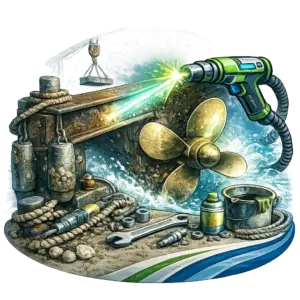
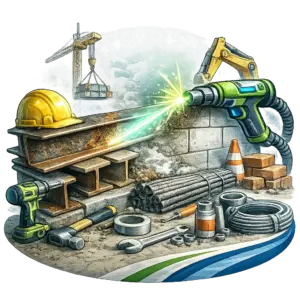
✓ Rust removal from structural steel
✓ Paint stripping from aluminium aircraft components
✓ Thermal coating removal from turbine blades
✓ Graffiti cleaning from heritage stonework
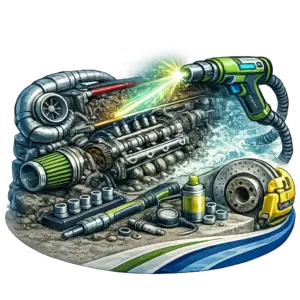
✓ Carbon deposit elimination from engine parts
✓ Oxide layer removal before welding operations
Single technology platform serves applications previously requiring multiple specialised methods. Equipment investment consolidates whilst capability expands substantially. Businesses serving diverse industries benefit particularly from this operational flexibility.
Zero Secondary Waste Generation
Contamination removal converts surface materials into vapour or fine particulate. Integrated extraction systems capture these byproducts before release. Collection volumes measure in grams rather than kilograms for typical projects.
No spent abrasive requires disposal. No contaminated solvents need treatment. No rinse water demands processing. Waste management simplifies to occasional filter replacement in extraction equipment.
Regulatory reporting obligations decrease proportionally with waste stream elimination. Environmental audits find minimal issues when hazardous material usage approaches zero. Public perception improves when businesses demonstrate genuine commitment to pollution prevention.
Industries Leading Transition to Advanced Technology
Manufacturing Sector Adoption
Metal fabrication workshops benefit enormously from laser cleaning capabilities. Weld preparation proceeds faster with superior results. Surface activation before bonding improves adhesion reliability. Mould cleaning occurs without dimensional changes affecting production tolerances.
Production scheduling becomes more predictable when cleaning operations deliver consistent results regardless of operator experience levels. Quality control simplifies through elimination of technique variation. Customer satisfaction increases through superior surface finish quality.
Automotive Applications
Vehicle restoration businesses adopted laser technology early for compelling reasons. Paint removal proceeds without panel warping. Chrome plating survives cleaning without damage. Delicate trim components restore without mechanical stress.
Production facilities integrate laser systems into assembly lines. Spot weld preparation occurs automatically. Quality verification happens objectively through automated inspection. Defect rates decrease whilst throughput increases substantially.
Aerospace Maintenance
Aviation component refurbishment demands absolute substrate integrity preservation. Laser cleaning meets these stringent requirements through controllable, repeatable processing that introduces zero stress concentrations or material property changes.
Maintenance facilities report significant productivity improvements. Component turnaround times shorten. Inspection reliability increases on properly cleaned surfaces. Rework requirements virtually disappear when initial processing achieves specification compliance consistently.
Heritage Conservation
Cultural preservation professionals appreciate laser cleaning’s selectivity and gentleness. Stone building facades clean without erosion. Metal sculptures restore without patina loss. Timber structures treat without scorching or grain raising.
Conservation outcomes improve dramatically when cleaning methods respect original materials whilst removing harmful accumulations. Documentation quality increases when surfaces emerge truly clean without residual contamination obscuring details.
Strategic Decision Framework
Wellington businesses evaluating surface treatment methods face choices with long-term operational consequences. Traditional approaches continue functioning but impose increasing costs through regulatory compliance burdens, waste disposal fees and workplace safety requirements.
Laser technology eliminates these penalties whilst delivering superior technical performance. Substrate preservation, processing speed, result consistency and environmental responsibility all favour advanced methods over conventional alternatives.
Return on investment calculations increasingly support technology adoption. Chemical purchasing, abrasive media replenishment and disposal expenses accumulate substantially over equipment lifespans. Laser systems eliminate these recurring costs whilst reducing labour requirements through faster processing.
Competitive positioning improves when businesses offer capabilities competitors cannot match. Superior surface preparation quality attracts discerning customers. Faster turnaround times capture time-sensitive projects. Environmental credentials strengthen brand reputation amongst sustainability-focused clients.
The transition from traditional to advanced cleaning methods represents strategic investment in organisational competitiveness. Technology maturity and cost-effectiveness now favour adoption across industrial sectors. Waiting for further development delays access to benefits available immediately whilst competitors gain market advantages through earlier implementation.
References
Environmental Protection Authority New Zealand – Regulatory frameworks governing hazardous substances, workplace chemical safety and waste disposal requirements for traditional cleaning methods.
https://www.epa.govt.nz/
Standards New Zealand – Technical specifications for surface preparation, coating systems, quality assurance and environmental management across industrial applications.
https://www.standards.govt.nz/
WorkSafe New Zealand – Occupational health and safety requirements for abrasive blasting operations, chemical handling, respiratory protection and workplace exposure management.
https://www.worksafe.govt.nz/
Ministry for the Environment – Sustainability guidelines, pollution prevention frameworks and waste reduction strategies relevant to industrial surface treatment operations.
https://www.mfe.govt.nz/
Business.govt.nz – Small business resources for technology investment decisions, environmental compliance and operational efficiency improvement.
https://www.business.govt.nz/
New Zealand Productivity Commission – Research and analysis on technology adoption, industrial efficiency and competitive advantage through innovation.
https://www.productivity.govt.nz/